
Murshidabad: Teacher Accused of Marrying 17-Year-Old Girl, Faces Legal Heat
A high school teacher in Murshidabad, West Bengal, has been charged for allegedly marrying a 17-year-old girl. The case exposes deep concerns about child safety, teacher misconduct, and loopholes in rural education systems.
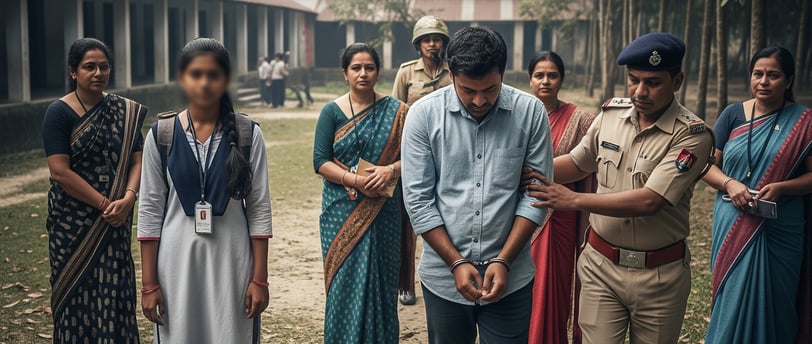
Murshidabad, West Bengal | July 2025 — In a disturbing development that has raised serious concerns over student safety in India’s educational institutions, a high school teacher in Murshidabad district has been booked for allegedly marrying a 17-year-old girl, reportedly a student under his care. The illegal union was uncovered after a local NGO tipped off child welfare authorities.
The teacher, whose identity has been withheld pending formal charges, is believed to have married the minor in a secret ceremony, away from public or family knowledge. The girl’s parents reportedly filed a complaint after discovering the truth, prompting swift action by the police.
Violation of Law: A Case of Child Marriage and Power Abuse
Under Indian law, marriage under the age of 18 for girls is strictly prohibited. The case falls under multiple violations:
Prohibition of Child Marriage Act, 2006:
Imposes penalties on any adult male marrying a minor, with potential imprisonment up to two years and/or a fine.Indian Penal Code, Section 376 (if sexual relations are proven):
Sexual intercourse with a minor, even with consent, is considered statutory rape.Protection of Children from Sexual Offences Act (POCSO), 2012:
If the teacher is proven to have engaged in sexual activity, POCSO provisions will apply, potentially leading to a minimum sentence of 7 years to life.
What makes this case more concerning is the imbalance of power—a teacher, entrusted with shaping young minds, allegedly used his authority to manipulate a minor for personal reasons.
Psychological Impact on the Minor and Family
According to psychologists, such incidents can have long-lasting consequences on a minor’s mental health and development. Dr. Ananya Sen, a Kolkata-based child psychologist, explained:
“When a figure of authority exploits a child’s trust, the trauma is often layered—shame, confusion, fear, and guilt. It severely affects the child’s future relationships, education, and sense of self-worth.”
The girl is currently under the care of the District Child Protection Unit (DCPU) and is receiving trauma counseling. Authorities are also working with her family to ensure a safe reintegration and continuation of education.
Institutional Failure? Accountability of the School Under Question
Local media reports suggest that the teacher had maintained a “close relationship” with the student for several months, raising questions about the school’s oversight and internal complaint mechanisms.
The District Education Officer has initiated an inquiry into:
Whether the school failed to notice behavioral red flags
If other staff members were aware but silent
Why there was no intervention or safeguarding measures
The teacher has been suspended pending the outcome of investigations. If institutional negligence is found, school management could face disciplinary and even legal consequences.
Community Response: Outrage and Reflection
The incident has triggered widespread outrage across Murshidabad and beyond. Child rights groups, women’s organizations, and local residents have condemned the act and are demanding stronger enforcement of child safety laws.
Many are calling for:
Mandatory gender sensitization and child protection training for all teachers
Stricter background checks for school staff
Establishment of a Child Protection Committee in every school, especially in rural areas
Some activists have even proposed biometric tracking for marriage registrations to flag minors being registered as spouses.
The Larger Picture: Why Child Marriages Still Persist in India
Despite improvements, child marriage remains a reality in parts of India—particularly in rural and marginalized communities. Reasons include:
Poverty and social pressure
Lack of awareness about legal rights
Gender-based discrimination
Poor enforcement of existing laws
According to the National Family Health Survey (NFHS-5), over 23% of Indian women aged 20–24 were married before 18. This case, while shocking, is part of a broader pattern that requires systemic intervention.
Moving Forward: What Needs to Change?
This case is a grim reminder of the urgent need for reforms at multiple levels:
Strengthen legal frameworks with real-time enforcement
Empower young girls through awareness, education, and helplines
Hold institutions accountable for any lapse in safety protocols
Promote community vigilance through local child protection committees
As India advances in technology and education, rural pockets must not be left behind when it comes to safeguarding the rights of children.